Keeping critical operations moving: what effective security looks like in practice
Author: Ben Dewson, CEO at NHN Group
In my last article, I talked about what it means for security to become part of the operation.
The practical side of that is making sure security protects people and assets without unnecessarily getting in the way of the operation it is there to protect.
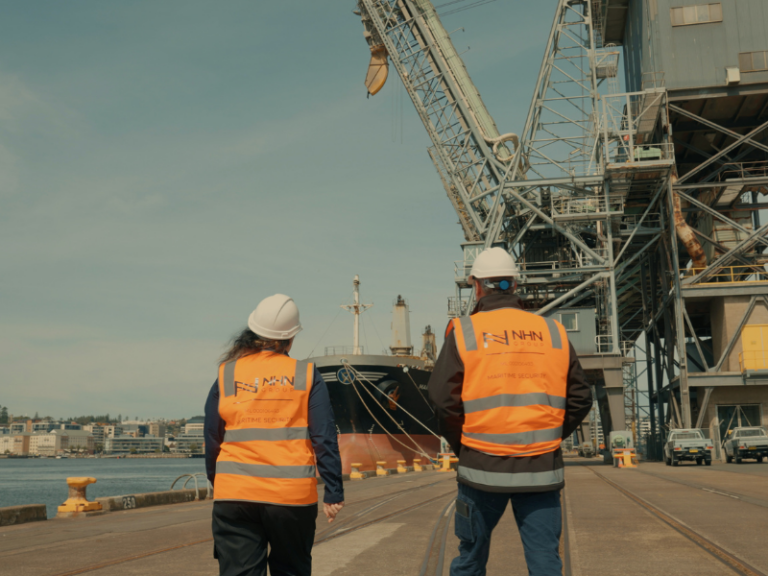
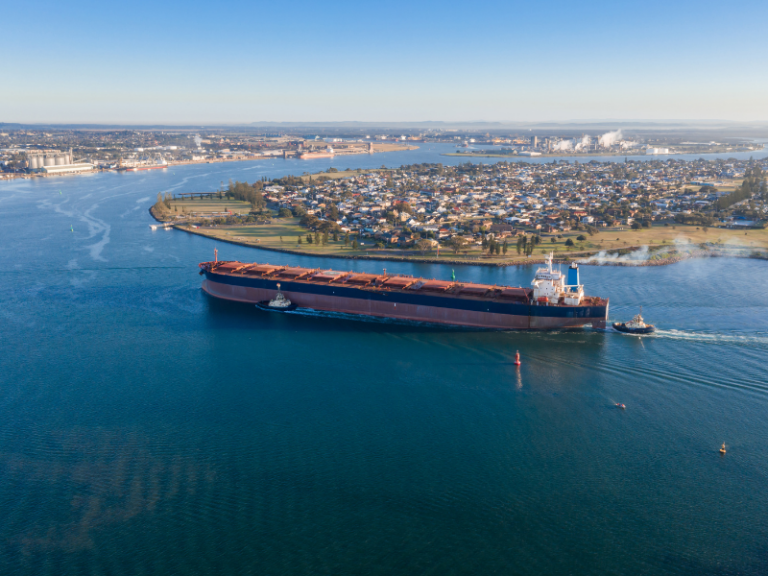
Across infrastructure, Critical State Infrastructure, ports, airports, energy, resources and heavy industry, that matters.
These are complex environments. People need to get to work. Contractors need access. Deliveries and freight need to move. Maintenance needs to happen. And when something changes, decisions often need to be made quickly.
Effective security needs to work within that reality.
Security at the everyday pressure point
Some of the most important interactions between security and operations are also the most routine.
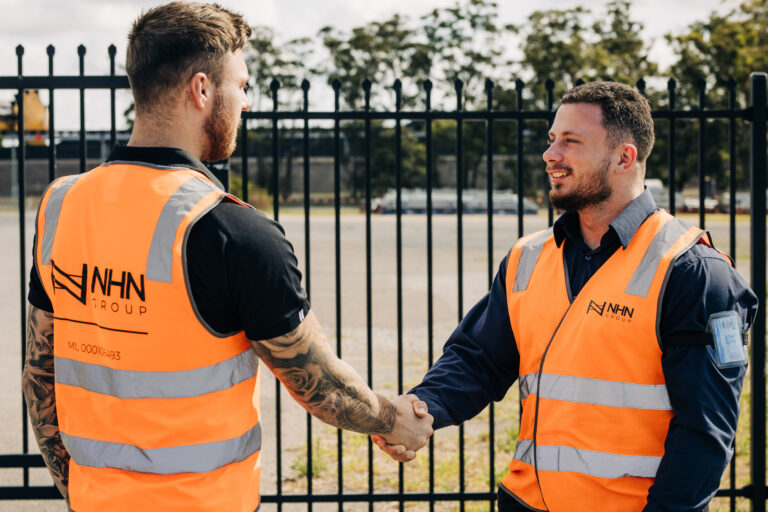
A contractor arrives for scheduled maintenance. A large workforce moves through the gate at shift change. A delivery needs access to a controlled area. A vehicle arrives without the expected documentation.
Individually, these might seem like relatively small security matters.
But delays or poor decisions at these points can quickly have wider operational consequences.
The answer isn’t to relax security requirements. It’s to have processes, people and escalation pathways that allow issues to be resolved efficiently while maintaining the appropriate controls.
Planning around how the site actually works
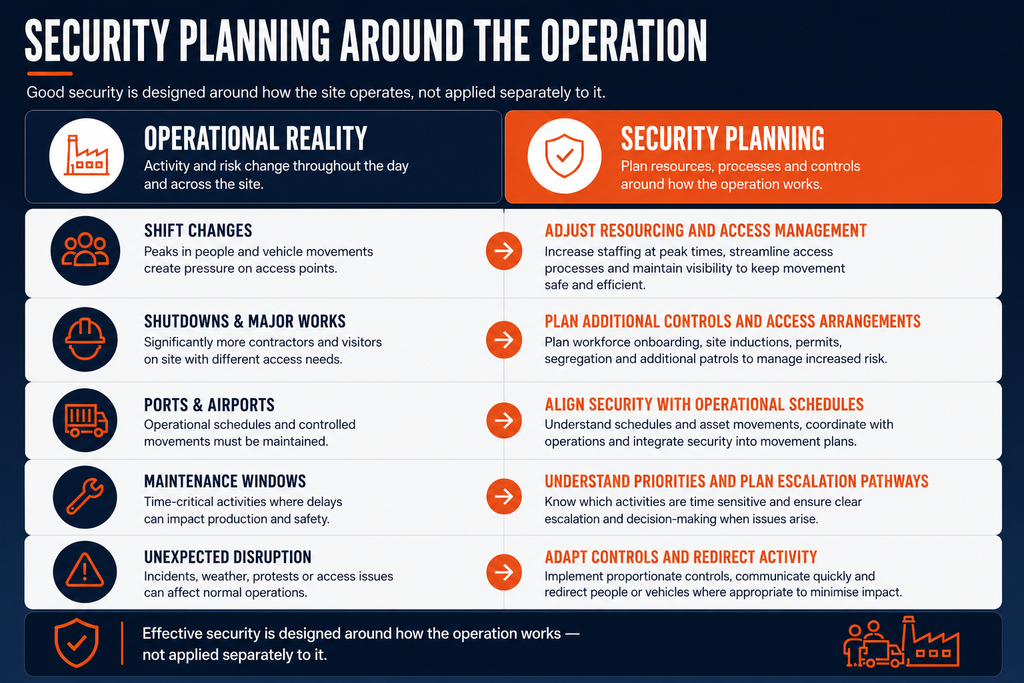
When something unexpected happens
This becomes even more important when normal conditions change.
An incident may affect an access point. Protest activity may disrupt movement around a site. An unauthorised person may be identified. Suspicious activity may require further investigation.
The security response needs to address the risk, but it should also consider the operational impact.
Does an entire area need to stop, or can the issue be contained? Can people or vehicles be redirected? Are additional controls required? Who needs to know, and who has the authority to make the next decision?
For critical infrastructure and Critical State Infrastructure, these decisions can have consequences beyond the immediate site, including impacts on transport, production, supply chains and essential services.
That’s why clear escalation and good judgement matter.
Protecting what needs to keep moving
Effective security isn’t about removing friction at any cost.
There will always be situations where access needs to be refused, an area needs to be secured or operations need to change because the risk demands it.
The difference is knowing when that response is necessary.
For critical operating environments, the goal is security that understands what is happening around it, responds proportionately and helps legitimate activity continue safely wherever possible.
Because protecting a critical operation isn’t only about keeping threats out.
It’s also about helping the people, assets and essential activity inside it keep moving.
NHN Group provides security and risk services across critical infrastructure and complex operational environments, including ports, airports, energy, resources and heavy industry.