Good to Great in the Age of AI
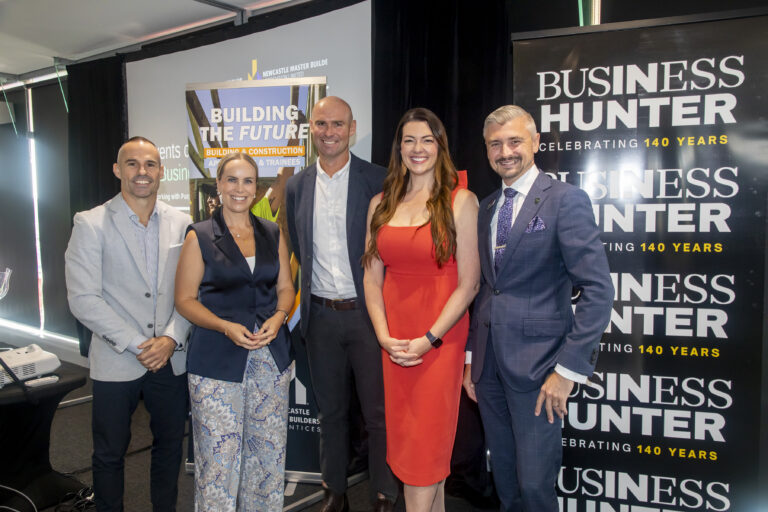
Author: Ben Dewson, CEO at NHN Group
AI should make organisations sharper, not broader. Faster, not fuzzier. It should strengthen the core purpose, not distract from it.
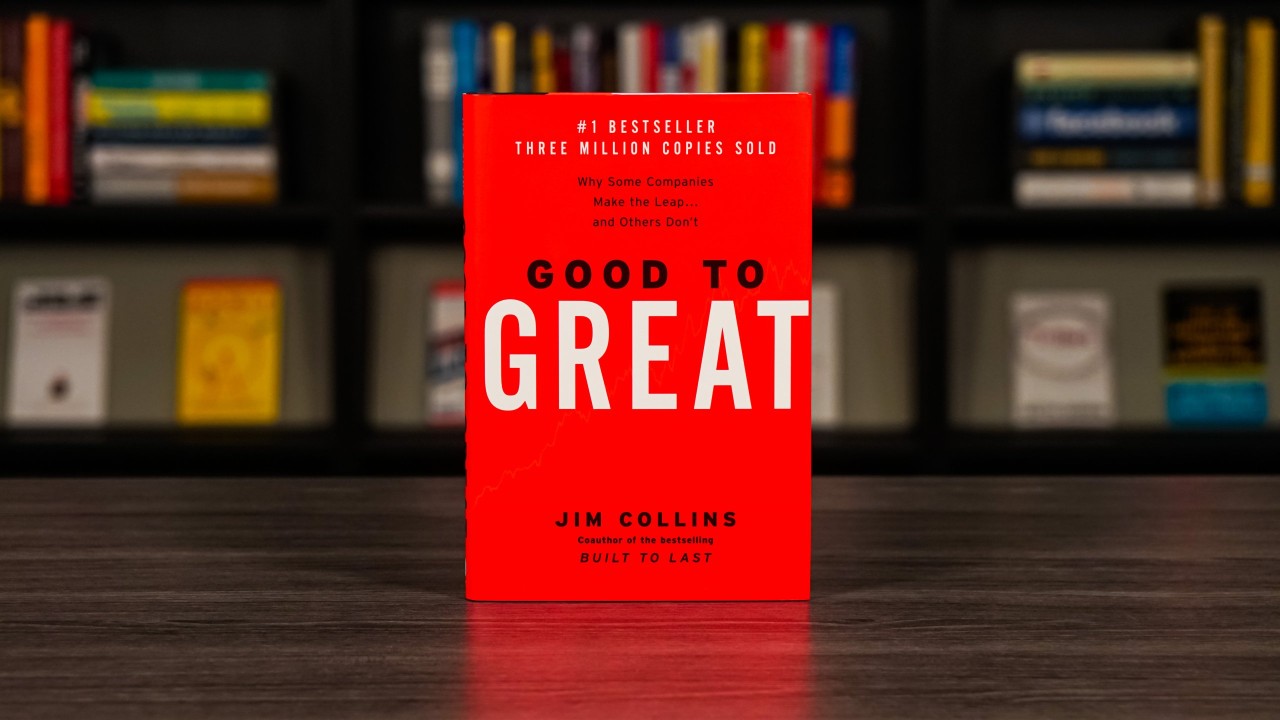
As I was preparing for a recent strategy session, I went back to Jim Collins’ Good to Great. It is a book I have leaned on for years and still fundamentally believe in. Reading it again through today’s lens, however, two core ideas stood out differently: Right People, Right Seats and Technology Accelerators.
Both prompted the same question. What does this look like in the age of AI, and what will it look like as AI continues to evolve?
That thought quickly expanded into others that many leaders are quietly wrestling with. Do we now ask whether AI can do the work before we ask who should do it? Is the traditional model of hiring support roles still valid when AI can augment existing capability? And what happens when you genuinely have the right person, but the seat itself becomes obsolete?
This piece is not about definitive answers. It is about how rereading Collins has forced me to reconsider his core ideas in a world where AI is no longer theoretical.
Right people, right seats with a new question
Collins famously argued that great companies get the right people on the bus before deciding where to drive it. I still believe that principle holds. Character, discipline and alignment matter more than almost anything else.
What has changed is the question that now needs to come first. Before asking who we should hire, we should ask whether AI can do the work, or materially reduce it.
This is not about replacing people for efficiency’s sake. It is about intellectual honesty. Many roles that historically justified a hire were built around process friction rather than genuine value creation. Increasingly, the better question is whether that friction can be removed, whether the existing role can be elevated through augmentation, or whether the seat itself needs redesigning rather than simply refilling.
That shift changes workforce design far more than most strategy conversations acknowledge – it also demands more discipline from leaders, not less.
What “right people” looks like now
One thing Collins got absolutely right, and that AI has not altered, is that values, character and internal drive remain foundational. Strong cultural alignment, humility, discipline and leadership capacity are enduring requirements.
Where AI changes the equation is what sits on top of those fundamentals. In an AI influenced organisation, the right people demonstrate learning agility, digital confidence, sound judgement and comfort operating in fluid roles. Tasks will evolve, tools will change and capability will age faster. The individuals who thrive will be those who can move as the seat reshapes around them.
Many of these traits were important before AI became mainstream, but they are now fundamental. If there is one word that captures this shift, it is adaptability.
When the seat disappears
This is where the conversation becomes uncomfortable. There will inevitably be moments where you have a genuinely strong contributor, someone aligned to your values and culture, but no longer a clear seat for them because AI has reduced or reshaped the role faster than the organisation has adapted.
Historically, that situation often led to restructure or redundancy. Increasingly, that reflex may prove shortsighted. If you truly have the right person, the responsibility shifts. The question becomes whether the next seat can be shaped, even if it does not yet formally exist. Before exiting, consider upskilling. Before replacing, consider retraining. Before reducing, explore whether lateral movement allows strengths to be applied elsewhere in the business.
That approach is not about sentimentality. It is about long term discipline. It protects culture, preserves institutional knowledge and avoids the economic and human cost of constant churn. In a period where technology accelerates change, the leaders who think carefully about people before they think mechanically about structure will build more resilient organisations.
Technology accelerators and the discipline test
Collins described technology as an accelerator rather than a creator of greatness. I agree with the spirit of that argument, although AI has quietly crossed a threshold. In many operational areas, AI is rapidly becoming foundational. Administration, reporting, coordination and compliance are all being reshaped. In that sense, AI is no longer a differentiator. It is becoming the cost of entry.
The greater risk lies elsewhere. AI dramatically lowers the cost of exploring adjacent opportunities, new services look easier to test, expansion appears more accessible, execution feels faster, and that creates temptation.
When barriers to experimentation fall, discipline becomes more important. Collins’ Hedgehog Concept remains the filter. What are we deeply passionate about? What can we be best in the world at? What drives our economic engine?
AI should enable that intersection, not redefine it. If the rationale for a new initiative is simply that AI makes it possible, that is often a signal to pause. Strategy should still be anchored in purpose and capability, not in technological excitement.
What this means for NHN
For NHN, this conversation is not theoretical. We operate across security, cleaning, investigations and hospitality, environments where trust, compliance and operational discipline are non negotiable. AI will increasingly underpin how we roster teams, manage reporting, invoice accurately, analyse risk patterns and maintain regulatory compliance. That is simply the cost of entry in a modern operating environment.
What will continue to differentiate NHN is not the technology itself, but the quality of our leaders, the alignment of our people and our clarity of purpose. Our work often places people into sensitive, high trust environments – and that responsibility cannot be outsourced to software.
As AI lowers the barrier to new services and adjacent opportunities, the temptation to expand simply because it is easier will grow. That is precisely where discipline matters most. Every hire, every redesign of a role and every potential new service must pass the same test. Does this strengthen what we are uniquely good at, or does it dilute it? Does it sharpen our focus, or broaden us in ways that erode clarity?
AI should make NHN sharper, not broader. That is the real application of Good to Great in the age of AI.